internals · 1 of 6 · architecture
An engine executes JavaScript. A runtime needs much more than that: it owns values across garbage collection, calls native code from JavaScript, resolves modules, boots from snapshots. rusty_v8 encodes those needs as a Rust API over a generated native boundary, and V8 has always been the only thing on the other side.
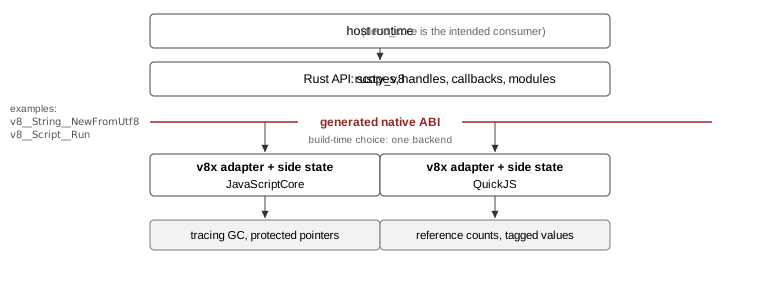
v8x treats that boundary as a portability layer:
Above the line nothing changes: the same crate, types, and lifetimes, so deno_core compiles as-is. Below the line each build pairs one engine with an adapter. The engine executes JavaScript; the adapter supplies what the engine does not have, which is V8′s model of ownership, context, identity, and startup state.
The two backends make the split concrete. JavaScriptCore brings a tracing collector, so the adapter roots values by protecting pointers. QuickJS brings reference counting and tagged values, so the adapter owns counts in slots it controls. Same API above, two disciplines below. The rest of the series is about keeping V8′s promises on top of each.
The boundary has a useful mechanical property: a workload that needs an unimplemented piece fails to link, naming exactly what is missing. Deno or a test suite becomes a completeness probe. A stub is a fine first implementation, because it converts “won’t build” into a failing test that the hill climb can count.
Next: Handles: value ownership across two garbage collectors